CLOUD Issue 16: Mr. TANG Qian Reflects on UNESCO-ICHEI
As a member of the UNESCO-ICHEI Governing Board, I'd like to take a moment to share something a little more personal. UNESCO-ICHEI is a Category 2 Centre under UNESCO — one of those institutions established through a Member State's technical and financial support, working alongside UNESCO to advance its broader mission.
Let me take you back nine years. I was serving as UNESCO's ADG for Education when Mr. LI Ming led a delegation from SUSTech to our headquarters in Paris. I received them in my office. They had come with an idea: to establish a UNESCO Category 2 Centre in Shenzhen.

Mr. TANG Qian, former UNESCO Assistant Director-General for Education
Now, the timing was, shall we say, complicated. Approvals for Category 2 Centres required sign-off from both the ADG for Education (that was me) and the Bureau of Strategic Planning (BSP), where I happened to also be serving as Acting Director at the time. And the task sitting on my desk? A comprehensive review of UNESCO's nearly 400 existing Category 2 Centres, many of which had long since eased to function meaningfully and needed to be wound down. So here I was, in the middle of closing Centres, being asked to open a new one. Swimming against the tide, you might say.
And yet, after careful consideration, I went to Director-General Bokova and recommended approval. Why? Three reasons. First, Shenzhen is where China's reform and opening-up took root. It is a city that has always been willing to try something new. Second, SUSTech was an institution with the courage to rethink higher education from the ground up. And third, and perhaps most importantly, Mr. LI Ming himself. There was a quiet tenacity about him that I found convincing.
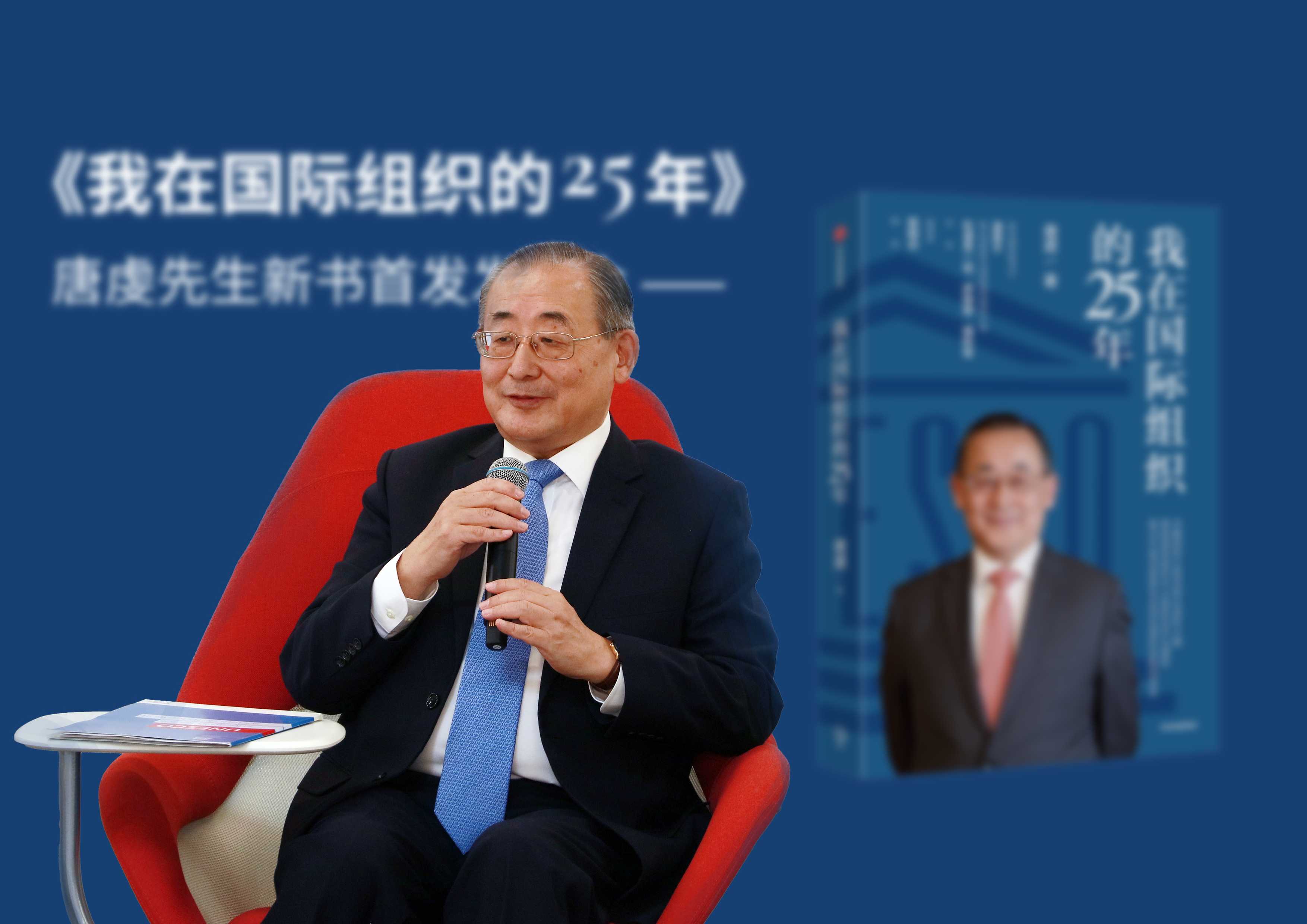 On 1 November 2020, the book launch and sharing session for Mr. TANG Qian's publication, My 25 Years in International Organizations, was held at SUSTech
I'd be less than honest if I said there were no doubts. As a Chinese national in a senior UNESCO role, had this institution ultimately failed, it would have reflected poorly on my judgement. That was a risk I was aware of.
Over the years, UNESCO-ICHEI has built IIOE, developed Micro-Certification Project and shared curriculum resources across the Global South, and made a real contribution to UNESCO's priority agenda. The UNESCO Beijing Office and the Chinese National Commission for UNESCO both offered their commendations. ICHEI has exceeded, by some distance, what I had imagined when I signed off on it all those years ago.
What makes this institution remarkable is not any single achievement, but the model itself. ICHEI has woven together SUSTech's research strengths, the Shenzhen municipal government's policy backing, and a network of enterprise partners into something that genuinely supports UNESCO's work and contributes to other Member States. Among all Category 2 Centres, I believe this stands out.
More broadly, ICHEI embodies something I care about deeply. A year ago, I joined China's Advisory Committee on Building an Education Powerhouse, at the invitation of Minister HUAI Jinpeng. One of its central ambitions is for China to play a more active role in global education governance, not simply by sending officials to international organisations, but by sharing China's educational experience and helping developing countries build their own systems. ICHEI does exactly that. It belongs to both UNESCO and to China's education community, and in that dual belonging, it reflects what a genuine partnership between a nation and an international organisation can look like.

In December 2020, Mr. TANG Qian attended the IIOE International Advisory Committee (IAC) Meeting
I hope the team here will carry this work forward with the same spirit that got it started. And I hope the support from all quarters will continue.
——Remarks by Mr.TANG Qian at the Conference on Higher Education Innovative Development Conference: Talent Cultivation Resonating with Digital Intelligence, 7 December 2024