XJTLU: How to Build a Systematic "AI + Education" Ecosystem?
The Pioneer Award shines a light on technology-enabled ecosystems and the real change they deliver. On this front, XJTLU distinguished itself with clarity. Its expansive AI + Education ecosystem, spanning teaching, research and institutional administration, offers a compelling example of how innovation can take root and flourish. In the following pages, the team shares a first-hand account of how this ecosystem came to life, and what it reveals about the future of digitally empowered higher education.
Origins and Exploration
Since its founding in 2006, Xi'an Jiaotong–Liverpool University (XJTLU) has carried digital innovation in its DNA.
The university places great emphasis on the systematic application of technology across campus and has developed two major software ecosystems: one for teaching and learning, centred on the Learning Mall's Moodle-based learning management system, and another comprising various applications that support research and administrative work. Together, these systems ensure comprehensive coverage of the university's information infrastructure, helping departments standardise workflows and enhance the quality of services. Just as importantly, the university has worked to break down long-standing data islands between units by developing a unified data bus, enabling data exchange while reducing integration and maintenance costs.
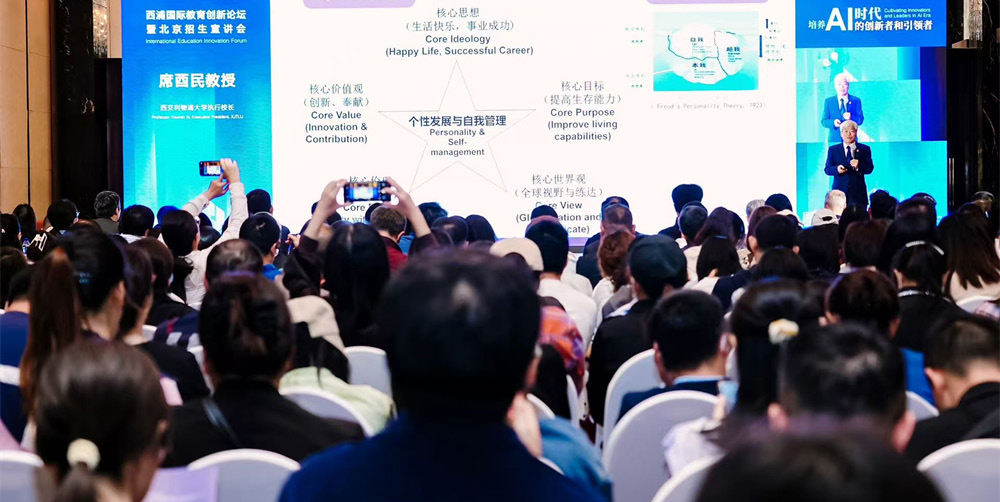
As a new international university oriented toward the future talent cultivation, XJTLU has always maintained acute perspection to emerging trends. After China's Ministry of Education released the AI Innovation Action Plan for Institutions of Higher Education in 2018, XJTLU organised the "International Education Innovation Forum" in Beijing in June. The forum was themed on artificial intelligence (AI). Benefiting from years of solid accumulation in digitalisation and a guiding pedagogical principle that encourages innovative use of technology, XJTLU quickly identified the enormous potential unleashed by new developments in AI at the end of 2022. In the first half of 2023, XJTLU integrated the most advanced and accessible AI large language models (LLMs) into its digital platforms. Through the unified digital portal, all students and staff can freely access AI tools.
Definitely, provision of the tools alone are not enough, clear guidance on effective usage is also essential. XJTLU, therefore, rapidly developed a university-level policy and strategic framework to guide teachers and students in using AI reasonably and effectively in teaching and learning.
From Digitalisation to Intelligent Transformation
Before 2023, XJTLU's digitalisation efforts focused on several core areas. First was student-centred approach for learning design, including educational environments, resources, faculty, pedagogy, and educational technologies. Second was the adoption of future-oriented models of education and research, such as blended teaching and learning, on- and off-campus collaboration, academia-industry collaboration for teaching and research, ecosystem partnerships and resource sharing, the "digital ubiquitous university", lifelong learning, and building inclusive, equitable, and high-quality education aligned with SDG 4. It also includes a flat and networked model of operational management, covering areas such as university governance, data governance, technology empowerment, efficiency enhancement and cost reduction, as well as agile development. Naturally, this also requires strengthening the foundational infrastructure for digital and intelligent operations, including networks and storage, software applications, computing power centres, and learning management systems.
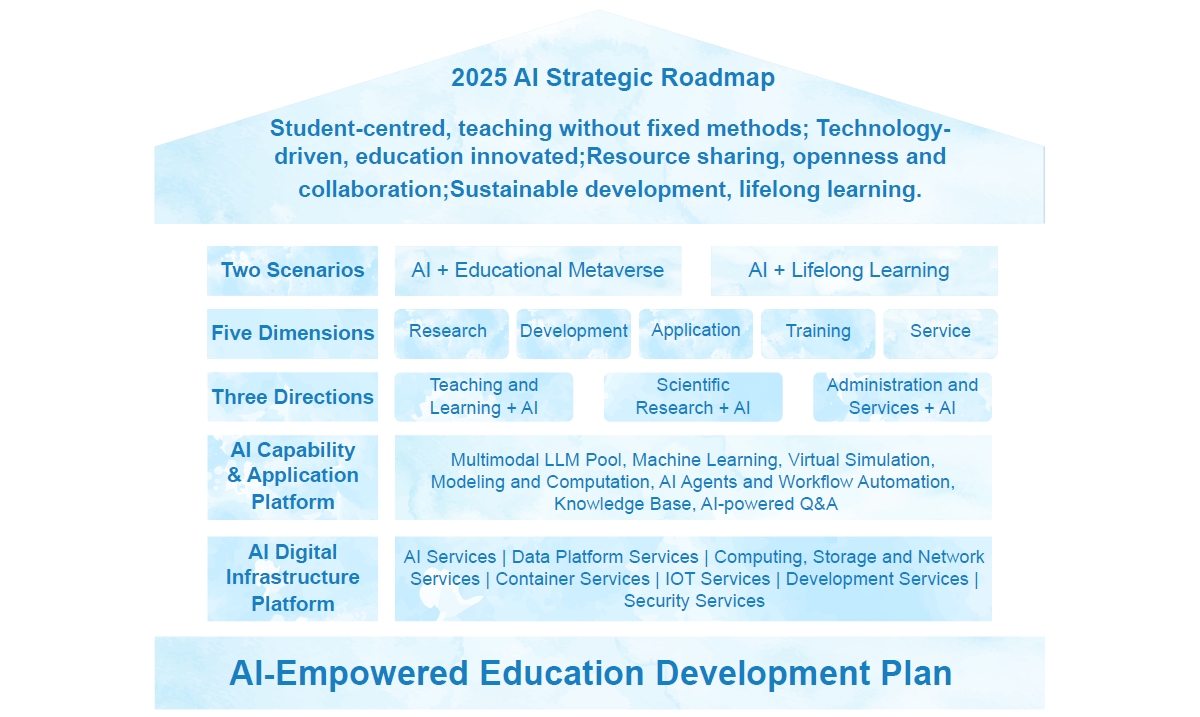
After 2023, with the construction of XIPU AI Platform, XJTLU's new Education+AI ecosystem has been reconfigured into a framework of "Two Platforms, Three Directions, Five Dimensions, and Two Scenarios". Its core elements include an AI digital foundational platform, an AI capability and application middle platform, and the deep integration of AI into three domains: teaching and learning, research, as well as institutional management and services.
Throughout this process, the role of the technology team has also evolved. Our work now centres on five dimensions aforementioned, including conducting in-depth research to guide technical development, building and delivering software and AI service platforms, driving the effective application of new technologies to improve operational efficiency, providing training to strengthen user capabilities and digital awareness, and finally, maximising value and extending impact through both internal and external service provision.
AI Agents Driving Transformation
These developments have enabled XJTLU to move from digitalisation to intelligentisation in education. The university is now further committed to educational innovation with a broader future vision. One direction is to expand learning spaces from the physical environment to digital environments through the integration of AI and metaverse technologies. Another direction is to combine AI and lifelong learning, encouraging learning beyond formal education system, crossing individuals lifetime needs.

© XJTLU
Since September 2024, XJTLU has organised around 40 AI training sessions, including approximately 10 dedicated to AI agents. The adoption of the AI Tutor has expanded rapidly. In the 2024–2025 academic year, AI tutors supported about 280 courses and facilitated 2.2 million interactions. By the 2025–2026 academic year, nearly all 900 degree courses across the campus will incorporate AI tutors. Comparative data from two consecutive academic years show that after integrating the AI Tutor, student failure rates dropped significantly, and students' average performance improved noticeably.In June 2025, the launch of the AI Agent Platform ignited strong creative momentum among faculty and students. Around 2,200 users participated in development activities, generating roughly 170 AI agents. The platform recorded more than 12,000 total visits and over 250 million tokens consumed. Among these agents, about 70 support teaching-related functions and around 40 support administrative tasks.
Notably, combined with the previous promotion of no-code and low-code development, preliminary estimates suggest that these tools saved nearly 10 million RMB in software development costs in the previous academic year.
"Intelligent XIPU"
Research and development are rarely the hardest part. The real challenge comes afterwards: ensuring that well-designed technologies are used effectively, and that they deliver the impact they were built to achieve. It is users who determine whether a technology fulfils its promise.
Value Creation and the User-Centred Perspective
At XJTLU, the application of technology cannot be driven simply through administrative directives. Therefore, one of the key initiatives within the "five dimensions" framework is a value-creation-driven approach. By engaging directly with users on the frontline and providing hands-on support, the university gather authentic operational needs to guide our technology development. Meanwhile, the university teams work closely with teachers to help them apply technologies in their teaching and daily work, cultivating the first group of "seed users".
XJTLU encourages teachers to document their experiences and develop case studies, which are published on the Learning Mal's Centre for Excellence in Innovation in Education (CEIE) website. Outstanding and representative cases are further recommended to the "Campus+" XJTLU column, jointly run by the XJTLU and Times Higher Education (THE). It allows these practices to achieve broader impact. As the case library continues to grow, experienced teachers are encouraged to become trainers who share their insights with colleagues inside and outside the school. In this way, we are helping to build a community of practitioners. Looking back, it's a process of advancing technology-empowered education and AI application from individuals to broader groups and participants. Its core lies in user-centeredness and value creation.
© XJTLU
With respect to the integration of AI and teaching, I believe it can be summarised into two pathways. For teachers, it involves "teaching AI" (imparting AI knowledge) and "teaching with AI" (using AI as teaching support). For students, it consists of "learning AI" (acquiring AI knowledge and skills) and "learning with AI" (using AI to support learning). The former concerns the study of AI as a course, whereas the latter views AI as a tool or method to enhance the learning experience.
Joint Course Development and Global Sharing
Courses are the indispensable vehicle to bring AI meaningfully into education. At XJTLU, this begins with university-wide AI literacy courses for first- and second-year undergraduate students, as well as discipline-based courses that apply AI into different majors. Our school has also strengthened its existing programmes in computing and intelligent engineering. We set up a new AI major, and provided students with related curriculum.Our training follows a user-centred approach, focusing on practical needs and real-world scenarios.
For example, we designed and conducted trainings based on everyday teaching scenarios. Our joint training programme on AI-related policy-making with UNESCO IIOE has also been widely recognised by participants. This reflects a shared concern across sectors, as AI is revolutionising rapidly and being applied broadly, people are eager to understand how to use AI responsibly, unleash its potential, and avoid the risks it brings.
In the non-degree programmes, the Learning Mall, XJTLU's non-degree education platform, also established an AI micro-degree in 2024. It's open to all learners publically, including XJTLU students. The micro-degree is designed with market needs and aimed at cultivating interdisciplinary & application-oriented talents by deepeningknowledge, broader perspectives, and strenghened competitiveness.
The micro-degree provides a centralised online certification that supports skill improvement and career transitions. Its structured courses offer short-term but highly efficient learning experiences. By combining theoretical study with hands-on practice, it allows students to develop their vocational skills. The micro-degree is designed in alignment with academic education to ensure that its content meets the same high standards.
The AI micro-degree is geared towards working professionals and students. It provides them with fundamental and core knowledge of AI technologies and applications. By taking this course, learners are able to upgrade their skills, work more efficiently, and be well-prepared for improving themselves or promoting the transformation of traditional enterprise management towards AI-empowered one. We believe that graduates will gain the ability to apply AI tools in their work and studies, enabling their academic progress, career development, and the digital transformation of their organisations.
Like the earlier online courses co-developed by the Learning Mall and UNESCO-ICHEI, these new programmes can also be shared through the IIOE platform. In this way, XJTLU's replicable experience can be widely spread to universities around the world.
Global Inspiration

© XJTLU
This ecosystem not only strengthens XJTLU's path towards becoming a centre of excellence and innovation, but also offers the world an inclusive, high-quality and sustainable pathway for digital transformation in education — a realisation of the vision to move "from XJTLU practice to global inspiration."
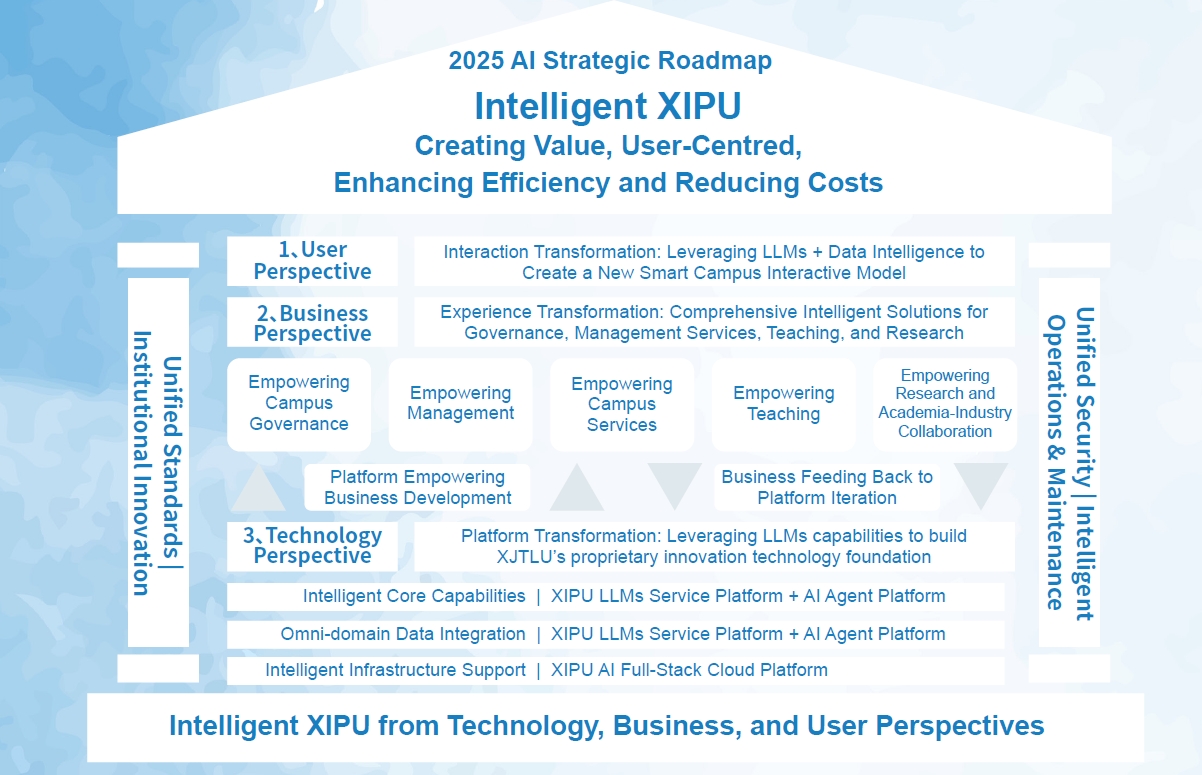
XJTLU has released a strategic framework for Education + AI, covering six key areas: AI governance, AI-empowered learning and experience, AI-driven research and innovation, AI-industry collaboration and entrepreneurship, institutional organisation and operations, and AI infrastructure and support. Moving forward, XJTLU will continue to deepen the application of AI in fields like teaching, research, administration, and services. By drawing on the power of AI, the university aims to reshape workflows and organisational culture. It will also advance the vision of an "Intelligent XJTLU" through platform transformation, revolution in user experiences, and developing new forms of interaction.
-
Dr. BI XinAthor
About the Author:
Dr. BI Xin currently serves as Xi'an Jiaotong-Liverpool University's Chief Officer of Data, Director of the Centre for Knowledge and Information, and the Director of the Digital Transformation Research Centre of the College of Industry-Entrepreneurs. As the Chief Officer of Data, he is responsible for university-wide policy-making, strategic implementation, and the promotion and execution of initiatives related to digitalisation, artificial intelligence, and data management.
- Bridging the Digital Divide Through GenAI Empowerment: The Mulungushi University Experience
- Weaving a National Digital Ecosystem: ITC and the Making of CCUN
- 2025 New Growth: The IIOE Ecosystem · 2025
- XJTLU: How to Build a Systematic "AI + Education" Ecosystem?
- The Power of Regional Collaboration: IUCEA's AI "Training of Trainers" Programme
- Consensus-Driven Digital Transformation: How the IIOE Nigeria National Centre is Pioneering an AI-Ready Academic Future
- Dialogue with CLOUD: Two Centres, One Pursuit of Excellence
- When Change Knocks: Inside the World of the Pioneer Award