2026 Leadership Policy Dialogue in South Asia: Advance AI-Empowered Higher Education Transformation
Jointly hosted by the UNESCO Kathmandu Office, Tribhuvan University, the Asian Development Bank (ADB), and the International Centre for Higher Education Innovation under the auspices of UNESCO (UNESCO-ICHEI), the "2026 Leadership Policy Dialogue in South Asia: Charting Responsible and Innovative AI Integration in Higher Education" was held on 20 May 2026 at the Everest Hotel in Kathmandu, Nepal.
The meeting drew approximately 120 representatives attending in person and over 100 participants joining online from South Asia and beyond. Government officials, higher education leaders, industry experts, and representatives from international organisations attended from Nepal, India, Bangladesh, Pakistan, Sri Lanka, the Maldives, Bhutan and other South Asian countries, as well as China, France and other countries. Among them were 13 university presidents and 26 deans from institutions including Tribhuvan University of Nepal, the University of Dhaka of Bangladesh, the University of Colombo of Sri Lanka, the Indian Institute of Technology Kharagpur, the University of Engineering and Technology Lahore of Pakistan, the Maldives National University, and the Royal University of Bhutan.
South Asia is home to approximately 50,000 higher education institutions and over 42 million enrolled students, making it the world's second-largest region in terms of higher education enrolment. The meeting centred on the digital transformation of South Asian higher education and pathways for the responsible integration of artificial intelligence (AI) into higher education ecosystems. The event also featured the official launch of the IIOE Nepal National Centre and the release of the Report on Digital Transformation in Higher Education in South Asia.
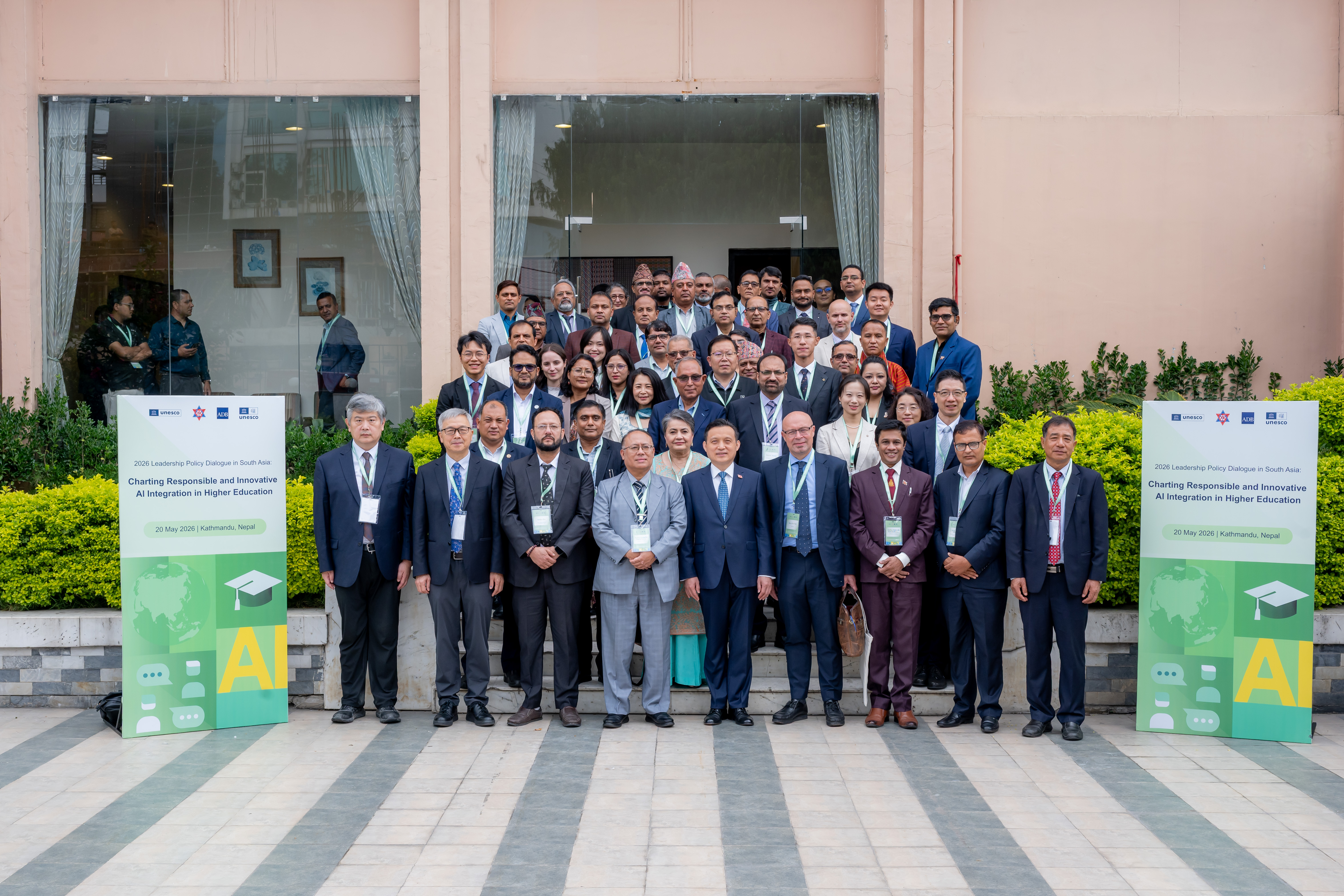
Group photo of participants
Opening Ceremony
During the opening session of the meeting, two distinguished guests delivered welcome remarks. H.E. Mr. ZHANG Maoming, Ambassador Extraordinary and Plenipotentiary of the People's Republic of China to Nepal, noted that China attaches great importance to leveraging AI to empower education transformation. He stated that "AI + Education" has been incorporated into China's 15th Five-Year Plan, with the goal of basically establishing a framework for the deep integration of AI and education by 2030.
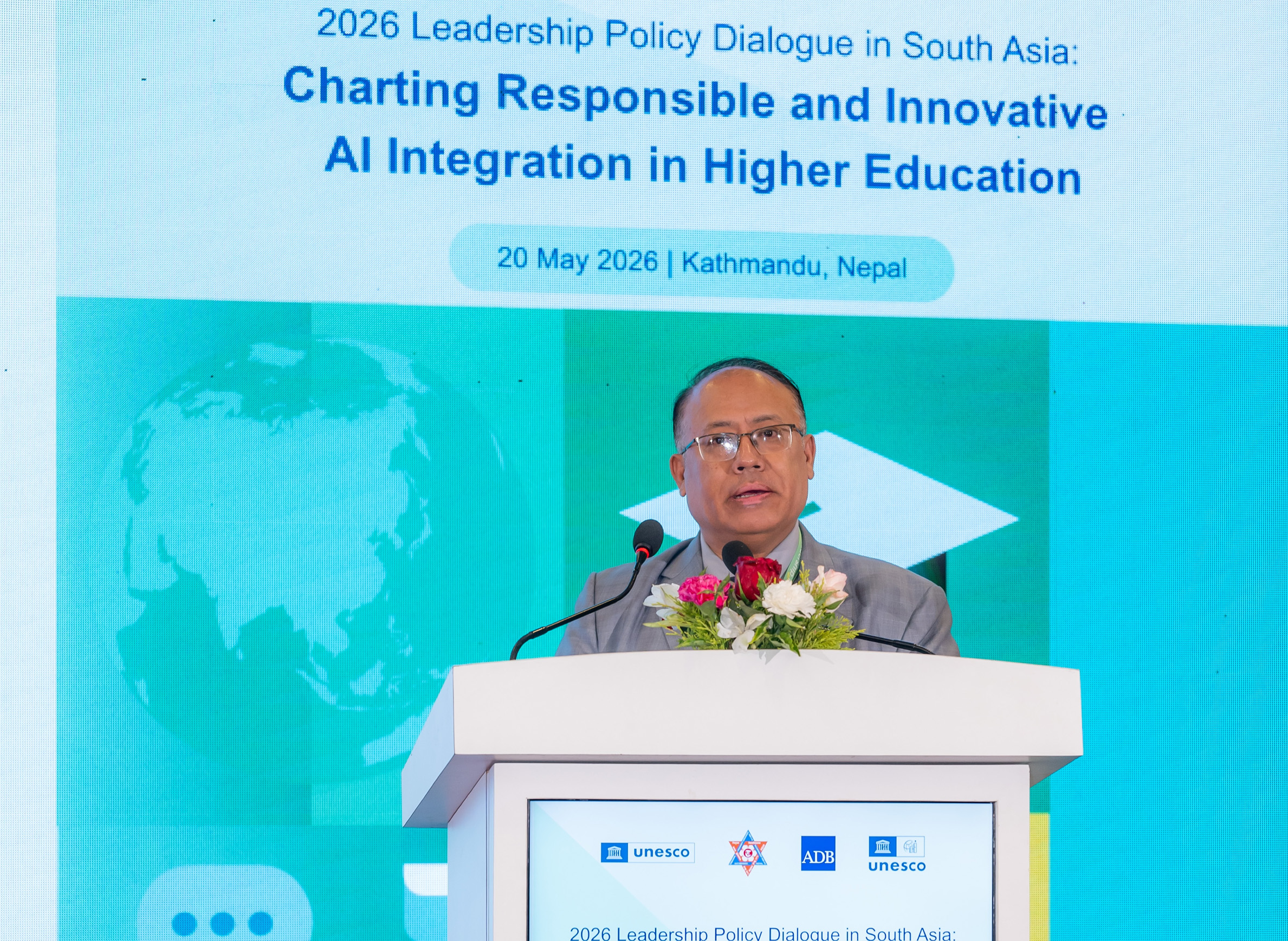
Dr. Kedar Prasad Acharya, Secretary of the University Grants Commission (UGC) of Nepal, stated that the UGC Nepal is promoting curriculum optimisation, strengthening faculty capacity, and advancing the effective integration of AI into teaching and educational governance.
Four representatives from the organizing institutions delivered opening remarks. Mr. Arnaud Cauchois, Country Director of the Asian Development Bank (ADB) Nepal Resident Mission, noted that the ADB is working with Nepal's Ministry of Communication and Information Technology, leading the "Nepal AI Dialogue Series" initiative. Prof. Sushil Bahadur Bajracharya, Vice Chancellor of Tribhuvan University, Nepal, called on universities, regulatory bodies, and governments to strengthen collaboration in formulating future-oriented policies to ensure that AI reinforces rather than replaces the core values of higher education, and that no university, teacher, or student is left behind. Mr. Jaco du Toit, UNESCO Representative to Nepal and Head of Office, pointed out that higher education institutions should place greater emphasis on the ethical governance and application of AI to promote educational inclusion, enhance learning outcomes, and serve the public good. Professor JIN Li, Director of UNESCO-ICHEI, emphasized the importance of regional cooperation and shared platforms. He stressed that what truly drives educational transformation is not technology alone, but more importantly human capacity, institutional development, and collaborative partnerships.
The conference was hosted by Dr. Lila Nyaichyai, Head of the Department of Library and Information Science at the Tribhuvan University.
 |  |
| H.E. Mr. ZHANG Maoming, Ambassador Extraordinary and Plenipotentiary of the People's Republic of China to Nepal | Dr. Kedar Prasad Acharya, Secretary, University Grants Commission, Nepal |
 |  |
| Mr. Arnaud Cauchois, Country Director, Nepal Resident Mission, Asian Development Bank | Prof. Sushil Bahadur Bajracharya, Vice Chancellor, Tribhuvan University, Nepal |
 |  |
| Mr. Jaco du Toit, UNESCO Representative to Nepal and Head of Office | Prof. JIN Li, Director, UNESCO-ICHEI |
 | |
| Master of the Ceremony: Dr. Lila Nyaichyai, Head of the Central Department of Library and Information Science, Tribhuvan University, Nepal |
Keynote Speech
The keynote session, themed "AI-Driven Higher Education," presented a comprehensive panorama of AI-empowered transformation in higher education from three dimensions: gender equality and ethical governance, faculty capacity building and the transformation of research paradigms, and national visions for digital development.
Ms. Shafika Isaacs, Chief of Section for Technology and AI in Education at UNESCO Headquarters in Paris, pointed out that the AI-driven transformation of higher education in South Asia is marked by significant gender disparities. Women's participation in coding and filing technology patents remains far lower than that of men, and they are often confined to assistant roles. She noted that UNESCO is advancing gender equality and women's empowerment in education through three dimensions. First, it promotes gender-disaggregated reporting, including faculty composition as well as achievement rates in digital and AI literacy. Second, it advocates gender-transformative curricula and pedagogy, such as proactively incorporating women's contributions to science and history into curricula and systematically eliminating gender stereotypes from teaching materials. Third, UNESCO launched the Women for Ethical AI(W4EAI) in March 2024 to address gender bias embedded in AI algorithms and to amplify women's voices in AI policymaking.

Ms. Shafika Isaacs, Chief of Section for Technology and AI in Education, UNESCO Headquarters in Paris
Prof. YANG Xueming, Chair of the Governing Board of UNESCO-ICHEI, noted that AI is profoundly reshaping scientific research and higher education by reshaping the paradigm of scientific research, enhancing the full research workflow, accelerating scientific discovery enabling interdisciplinary collaboration, while redefining teaching and learning in universities. He stressed that teachers urgently need to strengthen systematic AI competencies, guided by global frameworks and practical capacity-building initiatives such as the IIOE Micro-Certificate Course. He further emphasized that the next stage will require joint efforts from all stakeholders to advance AI-enabled research innovation and to establish standardized AI ethics education.

Prof. YANG Xueming, Chair of the Governing Board, UNESCO-ICHEI
Prof. Sudan Jha, member of the National Planning Commission of Nepal, focused his speech on Nepal's transition from a traditional outsourcing economy toward a regional digital innovation hub powered by AI, cloud infrastructure, and green energy. He emphasized that digital transformation is now being positioned as a core national development strategy. He also proposed the vision of building a "green digital infrastructure hub," while fostering niche sectors such as multilingual AI, Climate AI, AgriTech, and HealthTech. Ultimately, he outlined Nepal's digital future under the "Vision 2036": to build a a resilient, innovation-driven ecosystem capable of retaining young talent and delivering better services and opportunities for its citizens.

Prof. Sudan Jha, Member of the National Planning Commission, Government of Nepal
Session 1
Strengthening policies and strategies for AI integration in higher education in South Asia
The first session of the morning, titled "Strengthening policies and strategies for AI integration in higher education in South Asia," focused on collaboration and breakthroughs in AI policymaking.
Prof. Suman Chakraborty, Director of Indian Institute of Technology Kharagpur, delivered a keynote speech. Professor Chakraborty stated that South Asia is emerging as one of the world's most important hubs for the practice of "meaningful AI." In this regard, he advocated for supporting modular lifelong learning, advancing multilingual AI, and upholding the principle of "empowering teachers rather than replacing them." He also called for the simultaneous advancement of five key areas of regional cooperation: sharing multilingual AI models, jointly developing cross-border computing infrastructure, establishing collaborative ethical governance mechanisms, implementing major "AI for Society" challenge projects, and building cross-border mobility and exchange mechanisms for teachers and students. In his concluding remarks, he emphasized that the answer to how humanity will embrace the intelligent age will not emerge from Silicon Valley, but from classrooms, laboratories, rural communities, and the minds of younger generations across South Asia.
Dr. Shree Prasad Bhattarai, Joint Secretary of the Higher Education Division at Nepal's Ministry of Education, Science and Technology, systematically introduced Nepal's key policy developments in the fields of education and AI. First, the country is updating its "ICT in Education Master Plan," which explicitly incorporates AI-enabled classrooms, personalized learning, and virtual reality into its policy framework. Second, Nepal's first national AI governance framework, the "National AI Policy 2025," establishes unified guidelines for the ethical, transparent, and inclusive application of AI across sectors including education, healthcare, agriculture, and governance. In his concluding remarks, Dr. Bhattarai revealed that relevant authorities in Nepal are further advancing the formulation of new AI policies, with the next phase focusing on two major priorities: "AI-driven research and innovation" and "bridging the digital divide."
Dr. Lekh Nath Sharma, former Vice Chancellor of the Nepal Open University and Executive Chairperson of the Policy Research Institute, analyzed the current state of digitalization and AI integration in Nepal's higher education sector. At the policy level, initiatives such as the "National AI Policy 2025" and the "Digital Nepal Framework" have created what he described as an "encouraging policy environment." However, Professor Sharma emphasized that Nepal must formulate AI governance policies tailored to its own national context, with a focus on the "effective, appropriate, and human-centered use" of AI.
Ms. Chiara Busiol, Disarmament Programme Coordinator at the United Nations Regional Centre for Peace and Disarmament in Asia and the Pacific (UNRCPD), emphasized the security dimensions of AI. She pointed out that global governance mechanisms still struggle to keep pace with the rapid evolution of AI technologies. Although South Asian countries have successively introduced national AI strategies, their security agendas remain relatively weak. Ms. Busiol particularly stressed that higher education institutions should not only teach graduates "how to build AI," but even more importantly to help them understand "what AI may evolve into."
 |  |
| Prof. Suman Chakraborty, Director, Indian Institute of Technology Kharagpur, India | Dr. Shree Prasad Bhattariai, Joint Secretary at the Higher Education Division, Ministry of Education, Science and Technology, Nepal |
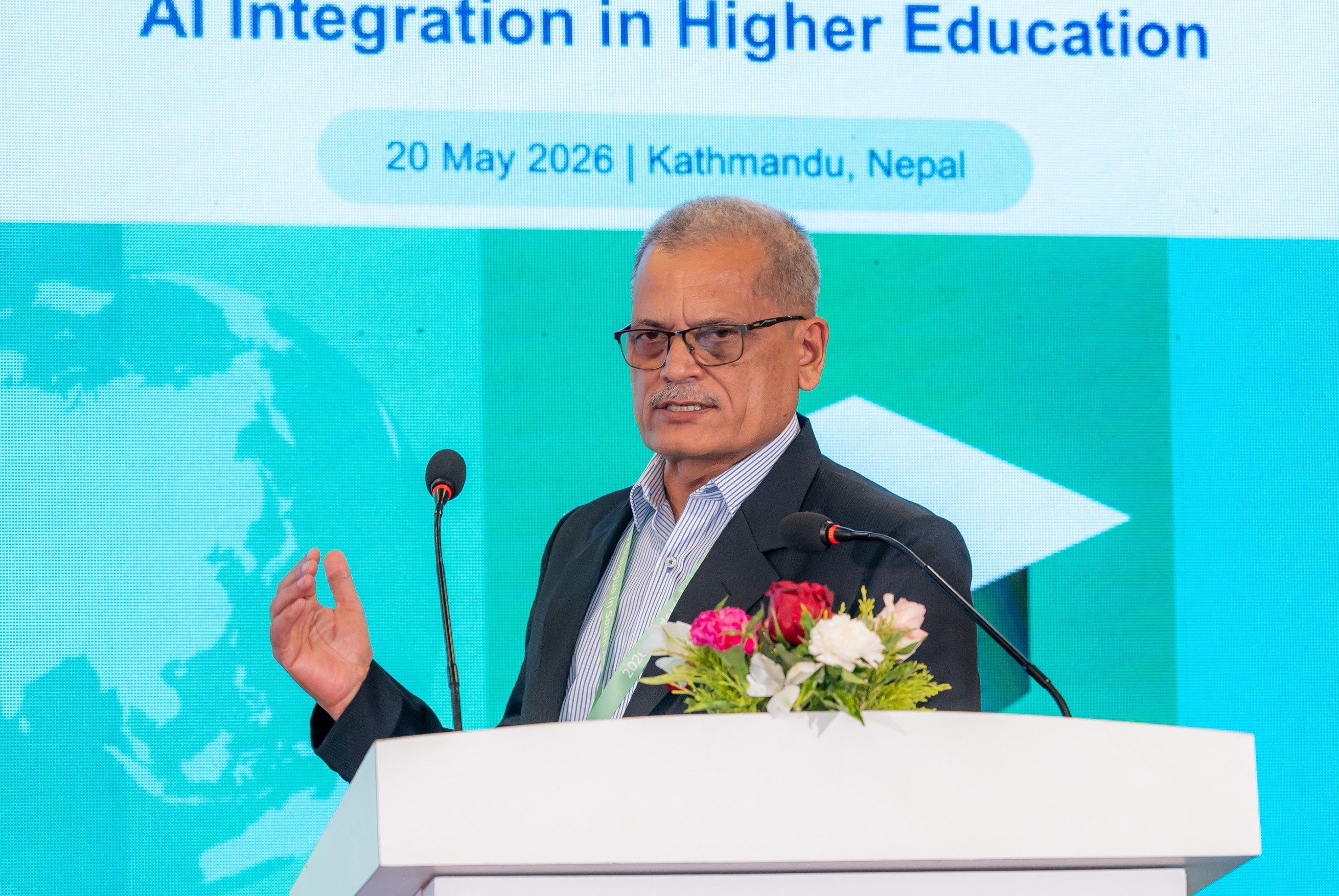 |  |
| Prof. Lekh Nath Sharma, Former Vice-Chancellor of Nepal Open University and Executive Chairperson, Policy Research Institute, Government of Nepal | Ms. Chiara Busiol, Disarmament Programmes Coordinator, United Nations Regional Centre for Peace and Disarmament in Asia and the Pacific(UNRCPD) |
The panel discussion was moderated by Professor Peshal Khanal of the Tribhuvan University. Professor A. B. M. Obaidul Islam, Vice Chancellor of the University of Dhaka, emphasized that South Asia cannot simply replicate the strategic templates of technologically advanced countries, arguing that local realities must serve as the starting point for the design and implementation of AI strategies. Mr. Subhash Dhakal, Joint Secretary of the Department of Information Technology (DoIT) under Nepal's Ministry of Communication and Information Technology, stated that South Asia must seize the window of opportunity presented by the Fourth Industrial Revolution, stressing that the pragmatic approach lies in proactively embracing and deeply integrating AI while maintaining strong risk controls. Professor Manish Pokharel, former Dean of the School of Engineering at Kathmandu University, argued that merely "digitalizing" existing curricula is far from sufficient to achieve educational goals; rather, the key lies in "rewiring" the education system itself instead of grafting new technologies onto outdated structures. Dr. Dovan Rai, Executive Director of Body and Data, criticized the prevailing tendency toward "techno-solutionism" in current AI education policies, noting that existing safeguards for data usage remain inadequate and calling on governments, academia, and frontline educators to jointly establish a more cautious and human-centered vision for technological development. Ms. Rida Qazi, Chief Technology Advisor for Special Initiatives and Investment in Pakistan, delivered an online speech. She described AI as a "dual-purpose tool" capable of simultaneously advancing educational reform and workforce inclusion, while also cautioning that AI will not automatically make higher education more inclusive; only through careful institutional design can marginalized groups truly be recognized and included. In his concluding remarks, Professor Khanal observed that South Asia must continue advancing policies, systems, and infrastructure in parallel, while paying equal attention to their deeper consequences — particularly issues of social equity and the new divides that AI may create. He expressed hope that the opportunities generated by AI can ultimately be transformed into solutions that help address these challenges.

Session 1: Panel Discussion(Ms. Rida Qazi, Chief Technology Advisor for Special Initiatives and Investment in Pakistan, delivered an online speech)
Session 2
Fostering an AI-ready higher education workforce through teacher professional development
The second session, titled "Fostering an AI-ready higher education workforce through teacher professional development," focused on faculty capacity building, a priority shared by universities across South Asia.
Professor Shahid Munir, Vice Chancellor at the University of Engineering and Technology, Lahore, Pakistan, proposed integrating Generative AI (GenAI) into the Community of Inquiry (CoI) framework to develop a "Generativism"model, in which teachers, students, and GenAI collaboratively co-create learning experiences. Looking ahead, he emphasized the importance of continuous faculty professional development, strong academia–industry linkage and national AI competency standards, and building a public–private partnerships for sustainable AI training infrastructure, with the aim of preparing graduates for a borderless, AI-driven human-machine collaborative future.
Ms. BI Xiaohan, Deputy Director of UNESCO-ICHEI, highlighted how the IIOE Micro-certification Programme is advancing the digital transformation of higher education through an "AI + Industry" training framework. She concluded that UNESCO-ICHEI is working together with universities across the Global South, international organizations, and technology enterprises to build an open and collaborative educational ecosystem, leveraging AI to enhance the equity, quality, and accessibility of higher education.
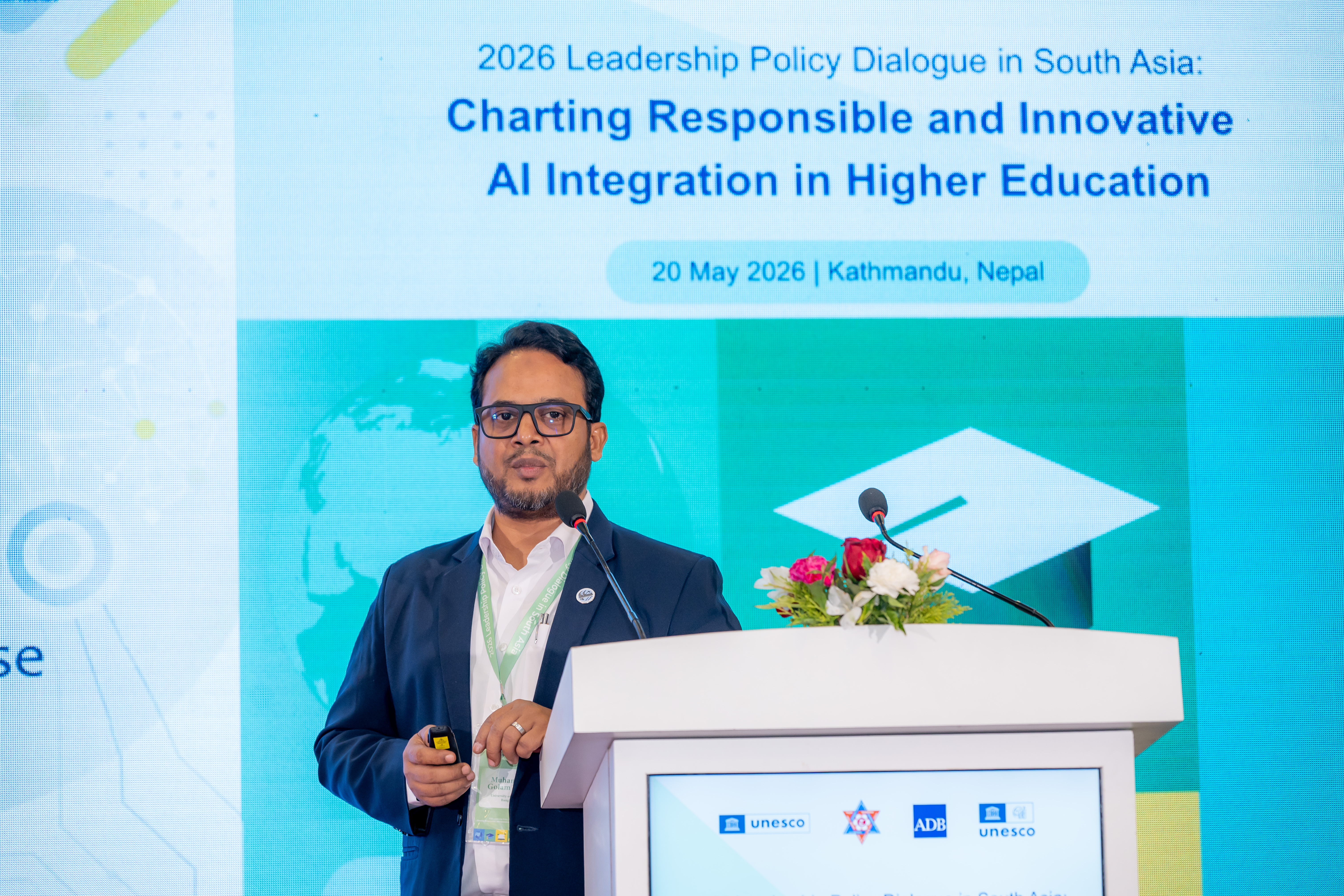
Professor Muhammad Golam Kibria, Professor and Head of Department of Computer Science and Engineering at the University of Liberal Arts Bangladesh, focused his remarks on the issue of "structural imbalance" in the AI transformation of higher education in Bangladesh. He pointed out that although some universities have already adopted learning management systems (LMS) and AI tools, the country still faces a significant "policy vacuum" at the national level, with the absence of a unified AI governance framework, ethical guidelines, and institutionalized implementation mechanisms.
In response, he called for a shift from "passive adaptation to AI" toward a "more strategic, ethical, and inclusive AI transformation". He further advocated for the establishment of AI ethics committee, low-cost AI access, rural digital learning centres, and a cross-border regional cooperation mechanism for South Asia, including a joint AI ethics framework.
Dr. Bed Prasad Dhakal, Assistant Professor of the Central Department of Education at the Tribhuvan University, emphasized that AI has already irreversibly reshaped the ecosystem of higher education and should be integrated into competency-based teaching and learning processes. He proposed that "future classrooms should become cognitive labs", where students engage in deep thinking and meaning-making with the support of AI. At the same time, he demonstrated the immense potential of AI-driven gamified learning. He pointed that education is not merely about computation, memorization, or information transmission, but more fundamentally about understanding and interpreting real-world contexts. Therefore, teachers need to leverage AI to transform the vast amount of information available on the internet into learning content with contextual meaning and relevance.
 |  |
| Prof. Dr. Shahid Munir, Vice Chancellor, University of Engineering and Technology, Lahore, Pakistan | Ms. BI Xiaohan, Deputy Director of UNESCO-ICHEI |
 |  |
| Prof. Muhammad Golam Kibria, Professor & Head, Department of Computer Science and Engineering (CSE), University of Liberal Arts Bangladesh (ULAB) | Dr. Bed Prasad Dhakal, Assistant Professor, Central Department of Education, Tribhuvan University, Nepal |
The panel discussion was moderated by Dr. Bhoj Raj Ghimire of the Nepal Open University. Professor Indika Mahesh Karunathilake, Vice Chancellor of University of Colombo, proposed that AI-enabled faculty development in higher education should be built upon the "5E" framework, centered on educational principles, ethics, equity, engagement, and safety assurance, while promoting the comprehensive integration of AI in higher education through the "5I" approach: inclusiveness, innovation, immersion, interdisciplinary integration, and industry collaboration. Dr. Ali Fawaz Shareef, Vice Chancellor for Academic Affairs at the Maldives National University, addressed the Maldives' geographically dispersed islands and diverse teaching conditions, suggesting that AI could be leveraged to deliver personalized teacher training tailored to geographical location, levels of digital proficiency, and specific needs. In discussing how to narrow the digital gender divide, Professor Kanwal Ameen, Vice Chancellor of the Government College Women University Faisalabad, advocated for providing female educators with more accessible participation opportunities through incentive mechanisms, performance evaluation systems, and flexible blended training environments. Mr. Tobgay, Director of the Center for Academic Innovation and Professional Excellence (CAIPEX) at the Royal University of Bhutan, emphasized that teacher training programs should cultivate reflective capacity, adaptability, future-oriented thinking, and ethical awareness, while also strengthening technical competencies to ensure that AI supports rather than replaces human creativity, critical thinking, and innovation.

Session 2: Panel Discussion
Launch of the IIOE Nepal National Centre
At the meeting, the IIOE Nepal National Centre was officially inaugurated. Prof. Chitra Bahadur Budhathoki — Coordinator of the IIOE Nepal National Centre, Professor at the Central Department of Education and Former Dean of the Faculty of Education, Tribhuvan University — delivered remarks. Prof. Budhathoki stated that the IIOE Nepal National Centre will draw on the IIOE Micro-Certification Courses on the IIOE online learning platform, together with digital resources covering AI applications, teacher professional development and capacity building, to serve higher education institutions across Nepal. The IIOE Nepal National Centre has established five strategic objectives: building a national hub for high-quality digital teaching and learning; constructing a collaborative network of Nepalese HEIs; creating a platform for professional development dialogue and exchange; coordinating the development and sharing of online courses and training resources at the national and international levels; and conducting joint research with UNESCO-ICHEI on educational technology and the digital transformation of higher education.
 |  |
| Prof. Chitra Bahadur Budhathoki, Coordinator of IIOE Nepal National Centre; Professor, Central Department of Education and Former Dean of Faculty of Education, Tribhuvan University, Nepal | Prof. YANG Xueming, Chair of the Governing Board, UNESCO-ICHEI, and Prof. Shankar Prasad Khanal, Rector of Tribhuvan University, signed the IIOE Nepal National Centre Agreement on behalf of the two parties |
Launch of Report on Digital Transformation in Higher Education in South Asia
The Report on Digital Transformation in Higher Education in South Asia was officially released during the policy dialogue. Ms. Marina Patrier, Deputy Director and Chief of Education of the UNESCO Bangkok Office, delivered an address online introducing the report's key findings. The report systematically reviews the progress, examples, and shared challenges of higher education digital transformation across South Asian countries. It identifies three major bottlenecks: policy coordination, faculty readiness, and industry–academia collaboration, thereby providing an evidence-based foundation for future regional action. Ms. Patrier emphasized that digital transformation must serve the goal of equitable and inclusive higher education. She noted that global higher education enrollment has grown from 100 million in 2000 to 269 million in 2024. As the world’s second-largest higher education region, South Asia hosts more than 42 million students and over 50,000 higher education institutions. However, significant gaps remain: only 19% of UNESCO Chairs have formally developed AI policies; none of the six South Asian countries have ratified any UNESCO recognition conventions; and in Sri Lanka alone, 50% of students lack access to essential internet devices. She called on countries to accelerate the ratification of the Tokyo Convention on the Recognition of Qualifications and the Global Convention, and to make greater use of the Higher Education Policy Observatory.

Ms. Marina Partier (Online), Deputy Director and Chief of Education, UNESCO Bangkok
Session 3
Promoting academia-industry collaboration for higher education innovation in South Asia
The third session, titled "Promoting academia-industry collaboration for higher education innovation in South Asia," focused on deep collaboration between industry and academia.
During the keynote session, Professor Uma Kanjilal, Vice Chancellor of the Indira Gandhi National Open University, introduced that IGNOU currently serves nearly 3.9 million registered learners. She noted that this unique scale advantage enables the university to address emerging challenges through a combined approach of "modular AI literacy pathways, micro-credentials, and a multilingual digital ecosystem." Professor Kanjilal emphasized that the future of AI in higher education depends on four key pillars: inclusiveness, ethics, accessibility, and scale. She stressed that AI capacity-building initiatives must extend beyond learners in technical disciplines to also reach groups that have long been underserved by existing educational systems, ensuring that AI becomes a lever for reducing inequality rather than deepening social divides.
Mr. LI Hao, Regional Director for Southeast Asia and South Asia at MAXHUB, introduced the smart classroom jointly established by MAXHUB, UNESCO-ICHEI, the Southern University of Science and Technology, and the Tribhuvan University. He explained that the initiative integrates both hardware and software solutions: before class, it assists teachers with AI-powered lesson planning and courseware generation, while after class, it automatically conducts classroom behavior analysis and generates feedback reports. Mr. LI expressed his expectation that MAXHUB’s AI-enabled teaching solutions will provide tangible support for the digital transformation of higher education across South Asia.
Dr. Subarna Shakya, Professor at the Institute of Engineering of Tribhuvan University and Director of the IT Innovation Centre, pointed out that Nepal's existing AI policies remain primarily focused on information and communications technology (ICT) and digital infrastructure development, and have not yet truly transitioned into the stage of deep AI integration. He further noted significant gaps in foundational capacity, with only 41% of students having access to personal computing devices and only 50% of institutions having established digital development plans. Dr. Shakya called on Nepal to prioritize the development of a stable AI ecosystem, strengthen local talent cultivation, and safeguard public knowledge systems through appropriate institutional arrangements.
Mr. LI Hao, Director of Southeast Asia and South Asia, MAXHUB
 |  |
| Prof. Uma Kanjilal, Vice-Chancellor, Indira Gandhi National Open University, India | |
 | |
| Dr. Subarna Shakya, Professor, Institute of Engineering; Director, IT Innovation Centre, Tribhuvan University, Nepal |
The panel discussion was moderated by Dr. Kaushal Kumar Bhagat of the Indian Institute of Technology Kharagpur. The panelists mainly explored the importance of ethically grounded and mission-oriented AI frameworks, sustainable collaboration models, and strengthened efforts in capacity building, localization, and inclusion across the region. Mr. Adesh Khadka, Joint Secretary of Nepal's Ministry of Communication and Information Technology, identified two key challenges: first, managing expectations for higher education in the era of AI intervention; and second, ensuring that industry-academia integration can genuinely contribute to economic growth. Dr. Uzma Quraishi, Vice Chancellor of Lahore College for the Women University, shared the university's practice of implementing "industry demand-driven curricula," under which students devote 70% of their study time to real-world projects within partner enterprises, where AI has already become an essential tool. Ms. Sunaina Pandey, President of the Federation of Computer Association Nepal, pointed out that Nepal's current "fixed four-year curriculum" can no longer keep pace with the rapid iteration cycles of the IT industry, calling for curriculum reform policies centered on "continuous updating." Mr. Rojesh Man Shrestha, Director of Fusemachines, introduced the company's collaborative model with multiple higher education institutions in Nepal, which operates through a "three-track parallel approach" combining internships, apprenticeships, and joint curriculum development, while also exploring the establishment of joint research centers to further strengthen industry-academia collaboration.

Session 3: Panel Discussion
Session 4
Integrating Gen AI in technical and vocational education and training (TVET)
The final session focused on "Integrating Gen AI in technical and vocational education and training (TVET)".
Prof. N. V. Varghese, Distinguished Visiting Professor at the Indian Institute of Technology Bombay, highlighted the growing severity of global youth unemployment. He noted that in 2023, approximately 20% of young people were classified as being "not in employment, education, or training (NEET)", while 87% of employers worldwide reported difficulties in recruiting adequately skilled workers. He attributed this paradox primarily to a persistent "Job-skill mismatch". Against this backdrop, he argued that AI is emerging as a critical tool for bridging the skills gap, given its capabilities in skills assessment, demand forecasting, and the personalization of learning and training pathways.

Prof. N. V. Varghese, Distinguished Visiting Professor, Indian Institute of Technology Bombay, India
Mr. Reg Bahadur Bhandari, Associate Professor and Registrar at Lumbini Technological University (LTU) of Nepal, noted that while Nepal has set a policy direction for integrating TVET with generative AI, its implementation frameworks remain underdeveloped and the pathway to translating policy into practice is still unclear. He emphasized that "AI will not replace teachers, but teachers who use AI will replace those who do not";and "The purpose of TVET is not just to train hands, it is to develop minds — generative AI is the most powerful tool we have ever had to do both."

Mr. Reg Bahadur Bhandari, Associate Professor and Registrar at Lumbini Technical University, Nepal
The roundtable discussion that followed was moderated by Prof. Prakash C. Bhattarai of Kathmandu University's School of Education. Mr. Jeffrey Xu Jian, Senior Education Specialist at the Asian Development Bank (ADB), outlined ADB's three-pillar approach: policy integration, investment lending and sector-specific deployment and called for cross-border recognition of certifications and standards and for investment in an "intelligent labour market system" to ease the demand–supply mismatch facing countries such as Nepal. Mr. Mahesh Bhattarai, Immediate Past Member Secretary of Nepal's Council for Technical Education and Vocational Training (CTEVT), candidly observed that Nepal is still transitioning from digitisation to digitalisation, and argued that AI should be treated not merely as a tool but as a destination, that the sector must move from analysis to predictive analytics. Dr. Amrita Sharma, a digital landscape expert, urged Nepal not to wait for expensive AI infrastructure and instead start immediately with small but actionable entry points — multilingual AI learning support, virtual technical demonstrations, AI-assisted training materials and modular certification for upskilling the existing workforce. Dr. HU Xiao, Associate Professor at the Faculty of Education, University of Hong Kong and at the College of Information Science, University of Arizona, emphasized that teachers are the central force of educational transformation, as many teaching reforms are in fact initiated and driven by teachers themselves. She therefore underscored that teacher training and professional development are of critical importance. She further noted that the IIOE platform serves as a valuable resource, providing strong support for teacher capacity building and conceptual renewal in Nepal and other countries. In his closing remarks, Prof. Bhattarai stressed that only strong partnerships among governments, industry, academia and development partners — coupled with regional collaboration and knowledge-sharing extending beyond South Asia — can build inclusive, innovative ecosystems that translate AI into real gains for education and workforce development.

Session 4: Panel Discussion
Closing Remarks
In the closing session, Professor Bed Raj Acharya, Dean of the Faculty of Education at Tribhuvan University, delivered the closing remarks. He emphasised a clear consensus emerging from the Dialogue: South Asian countries should draw on international experience while crafting context-specific AI education policies and strategies, ensuring that AI genuinely enhances the quality, equity and resilience of the region's higher education systems.

Prof. Bed Raj Acharya, Dean of the Faculty of Education, Tribhuvan University, Nepal
As the fifth regional policy dialogue convened by UNESCO-ICHEI, the 2026 South Asia Policy Dialogue — aligned with UNESCO's Higher Education Roadmap 2030: Beyond Limits — New Ways to Reinvent Higher Education and United Nations Sustainable Development Goal 4 (SDG 4) — provided an essential platform for experts and policymakers from across countries to exchange experiences, explore policies, and jointly chart a responsible roadmap for AI in higher education. The outcomes of the Dialogue are expected to be consolidated into a regional policy-oriented report, offering forward-looking reference for higher education decision-makers across South Asia.
The launch of the IIOE Nepal National Centre, the release of the Report on Digital Transformation in Higher Education in South Asia, and the in-depth dialogues across the four thematic sessions together construct a regional collaboration platform characterised by multi-stakeholder partnership, knowledge sharing and capacity building. Going forward, UNESCO-ICHEI will continue to work with partners in South Asia and globally to advance the innovative integration and responsible application of AI in higher education, nurturing knowledge-based and innovation-driven future societies.